The Taste of Centenary Heritage
More than 160 years of taste live through pastries, confections, cakes, coffee, and cherished recipes born from Turkish culinary culture.
The Taste of Centenary Heritage
Some recipes belong to a menu. Some belong to a culture.
Hafiz Mustafa began its story in Istanbul in 1864, during the Ottoman era. More than sixteen decades later, the name still speaks first through taste. Baklava leaves its delicate layers on the plate. Lokum accompanies Turkish coffee. Kadayif arrives golden from the oven. Cakes fill the counter beside puddings, dragees, and chestnuts. Salep recalls Istanbul winters. Tea belongs to conversation. Helva brings an older Anatolian sweetness to the table.
Together, they tell far more than a story of desserts. Centennial Desserts is the edible memory of Hafiz Mustafa.
Recipes have survived changing streets, changing cities, and changing centuries because their worth has always been judged at the table. Fine ingredients matter. Fresh preparation matters. Experienced hands matter. Proportion matters. Above all, taste matters.
The core tenets of Hafiz Mustafa's philosophy have remained consistent since its founding in Istanbul.
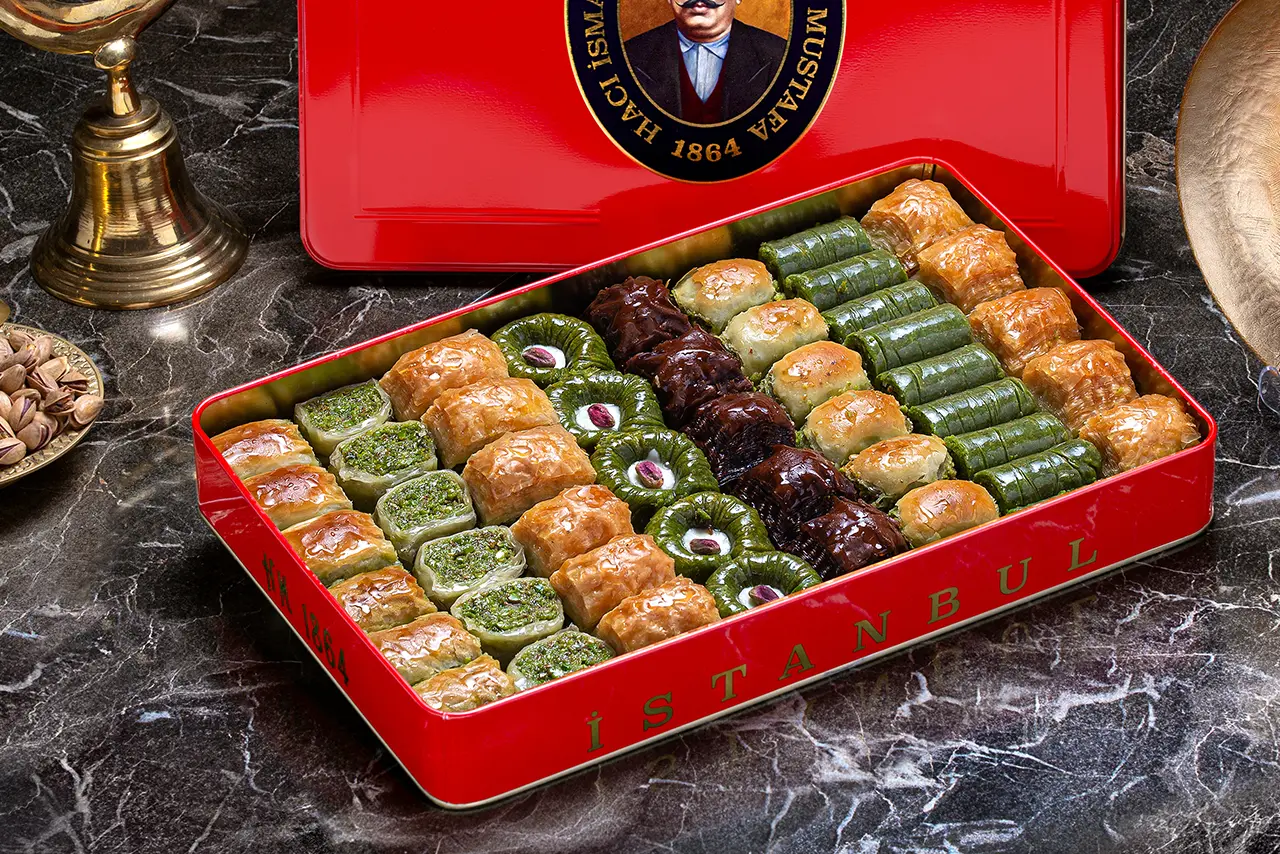
Baklava and Kadayif
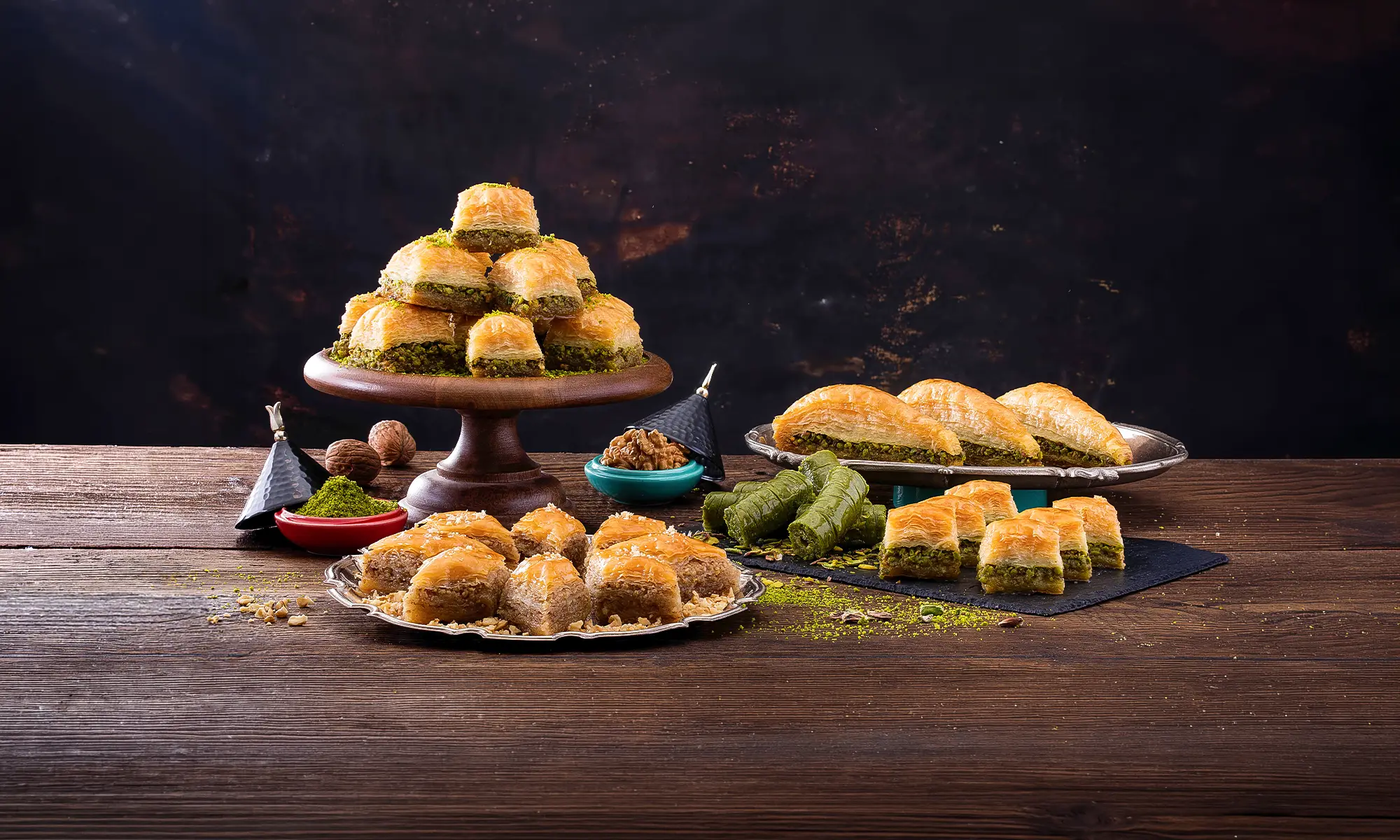
Few desserts explain Turkish pastry culture as beautifully as baklava.
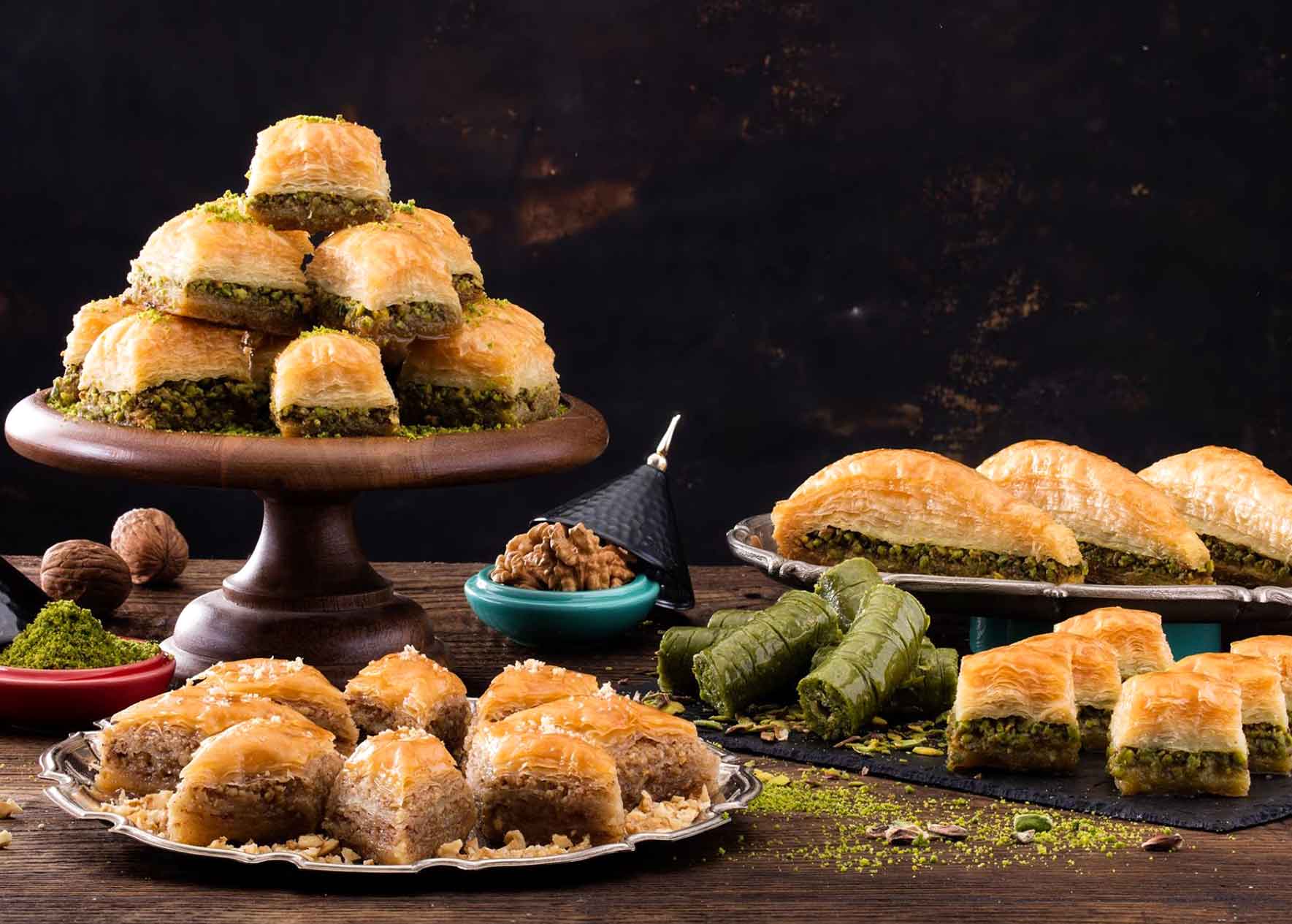
Fine phyllo creates its architecture. Clarified butter gives fragrance. Pistachios or walnuts establish character. Hafiz Mustafa’s secret sherbet gives sweetness its proper place.
Classic, Ankara, Carrot Slice, Wrap, Dilber, Jimjik, Twist, Saray Roll, Sobiyet, and other recipes show how dramatically proportion can change a familiar dessert.
Some give pistachio a greater role. Others celebrate fine pastry. Shape alters texture. Layer count changes the bite.
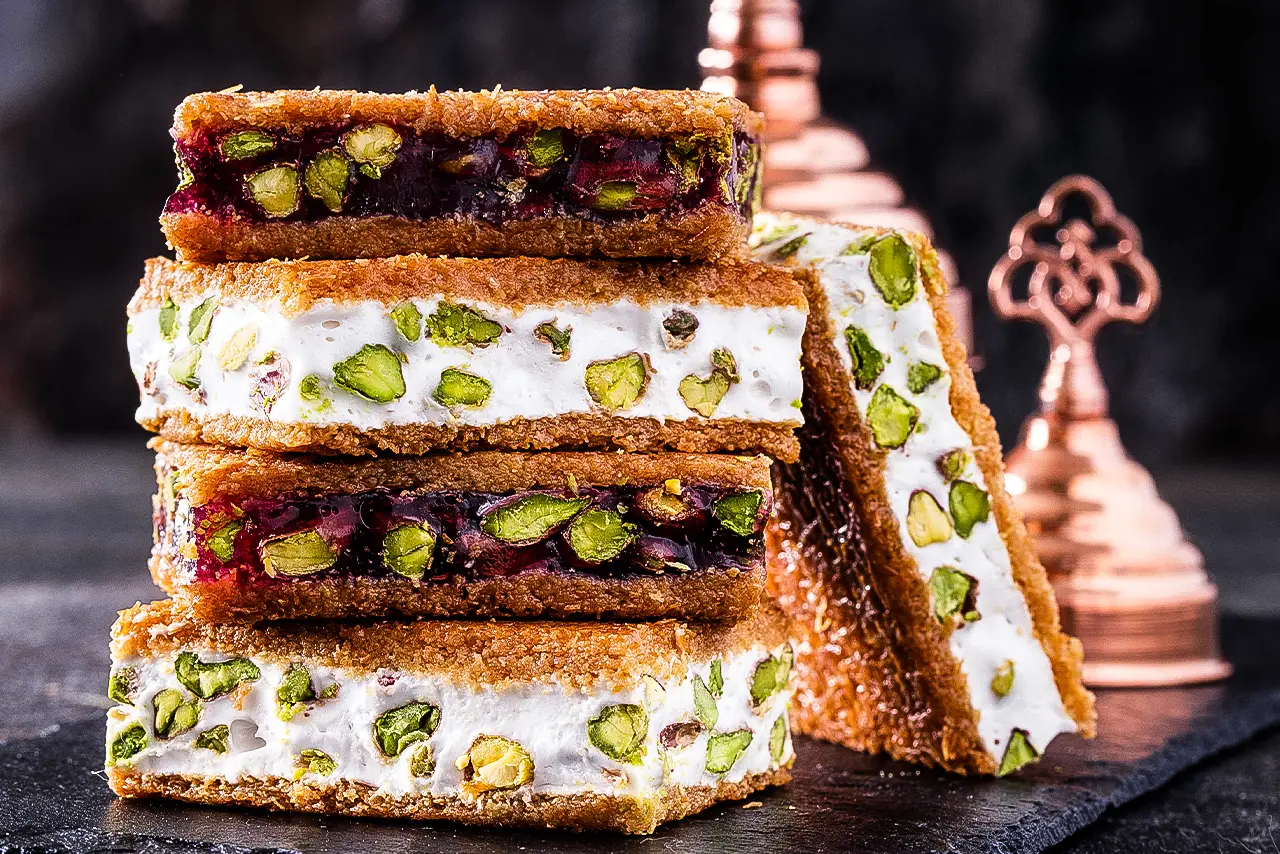
Kadayif begins from another idea entirely. Very fine pastry threads create its distinctive texture. Pistachio Kadayif keeps the recipe close to its classic character. Rolled and Honey varieties offer different interpretations. Halep Kadayif recalls a regional confectionery tradition. Ottoman Milk, Pistachio, and Pomegranate varieties introduce another vocabulary to the collection.
Lokum at the Table
Lokum carries a gentler kind of grandeur.
Its place beside Turkish coffee speaks to centuries of hospitality. A few pieces offered to a guest can say welcome more gracefully than a long speech.
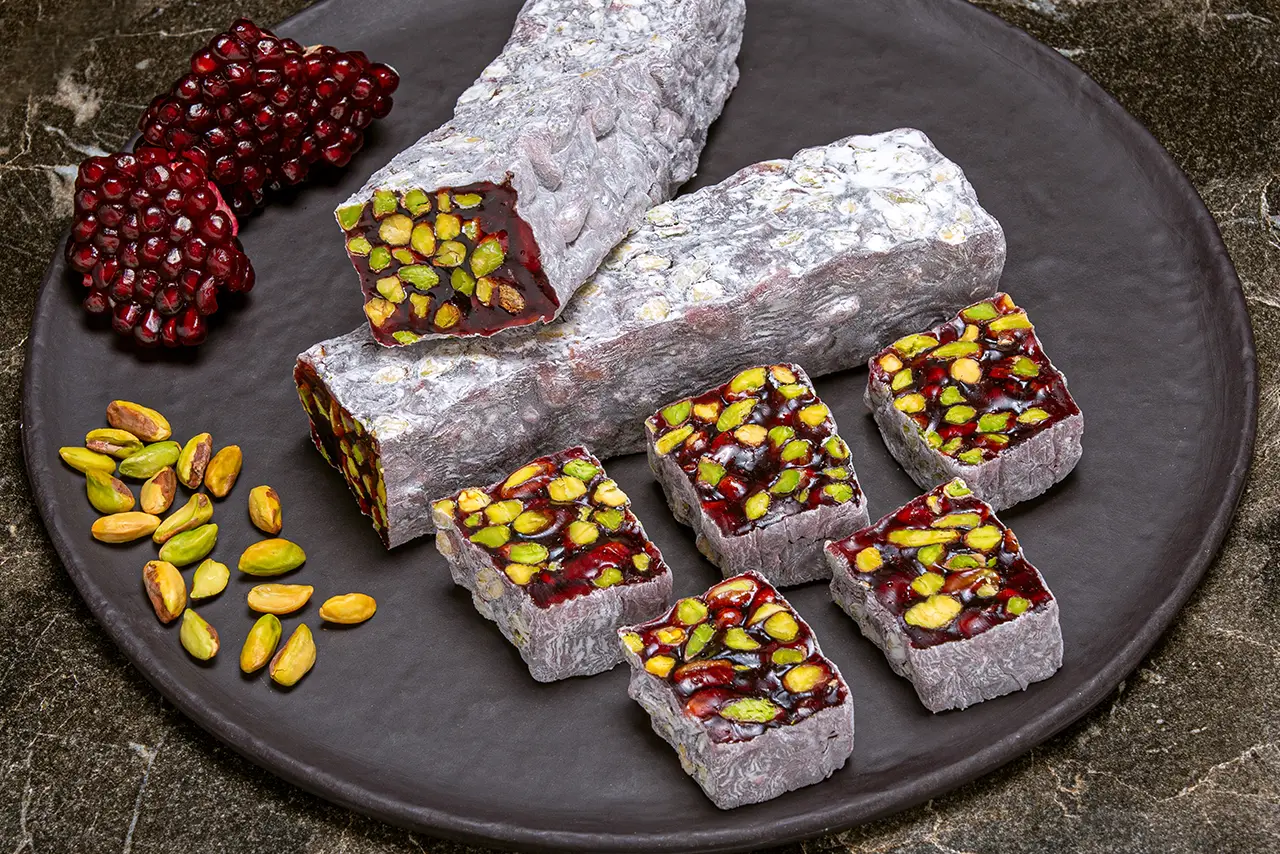
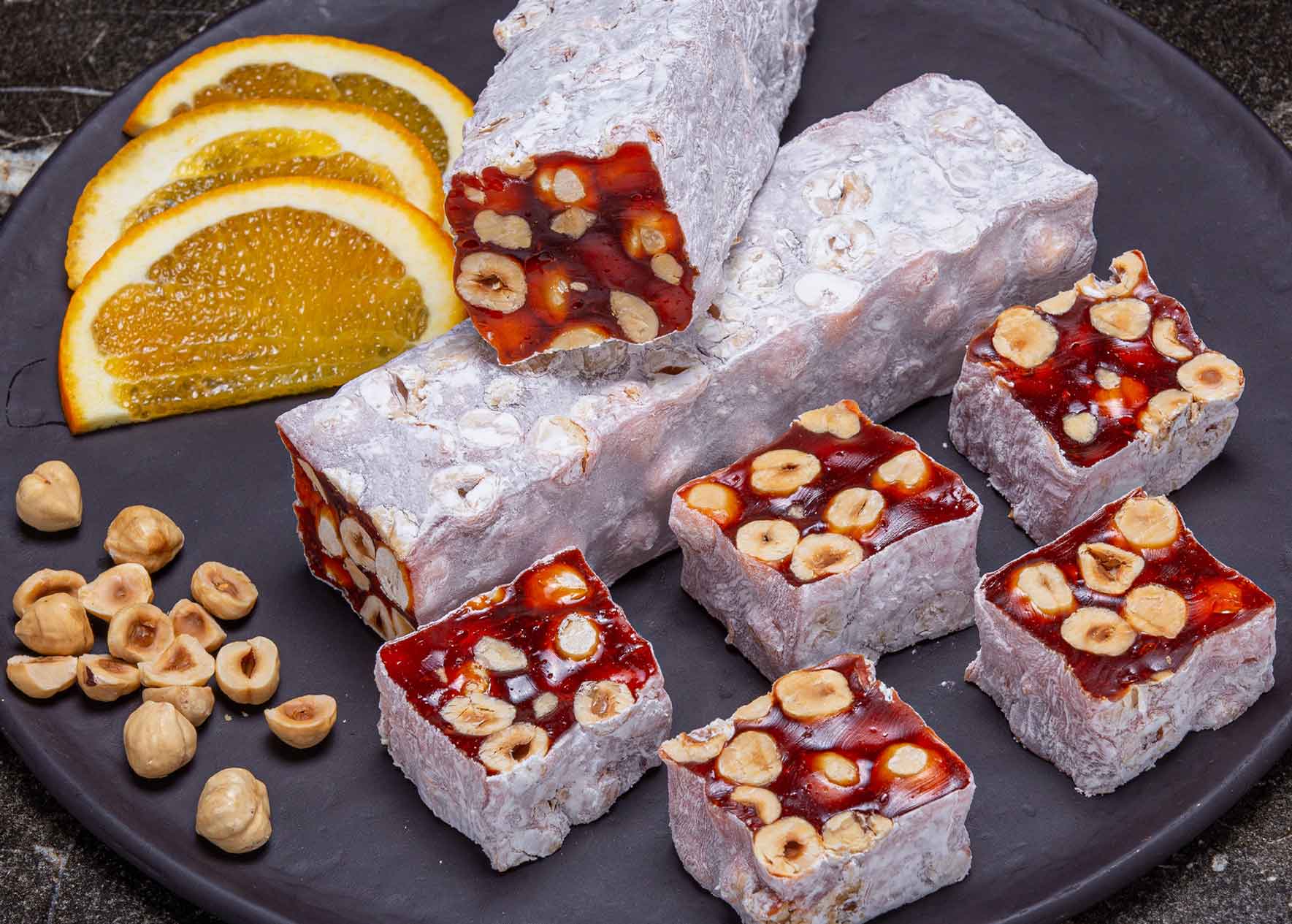
Hafiz Mustafa’s collection includes Plain, Wick, H.C., and Afyon Turkish Delight.
Pistachio meets honey and pomegranate in selected recipes. Hazelnut appears beside the orange. Walnut accompanies fig. Gum mastic gives a distinctly Turkish aroma. Cinnamon, lemon, and fruit varieties extend the collection in other directions.
Texture matters as much as flavor. Fine lokum needs tenderness and elasticity in equal measure. Nuts need generosity. Fruit needs a recognizable taste. Gum mastic needs enough character to announce itself naturally.
Lokum asks for restraint, good ingredients, and an experienced palate.
Its size may be modest.
Its history certainly is not.

Cakes and Milk Desserts
Hafiz Mustafa’s patisserie counter speaks in a different language.
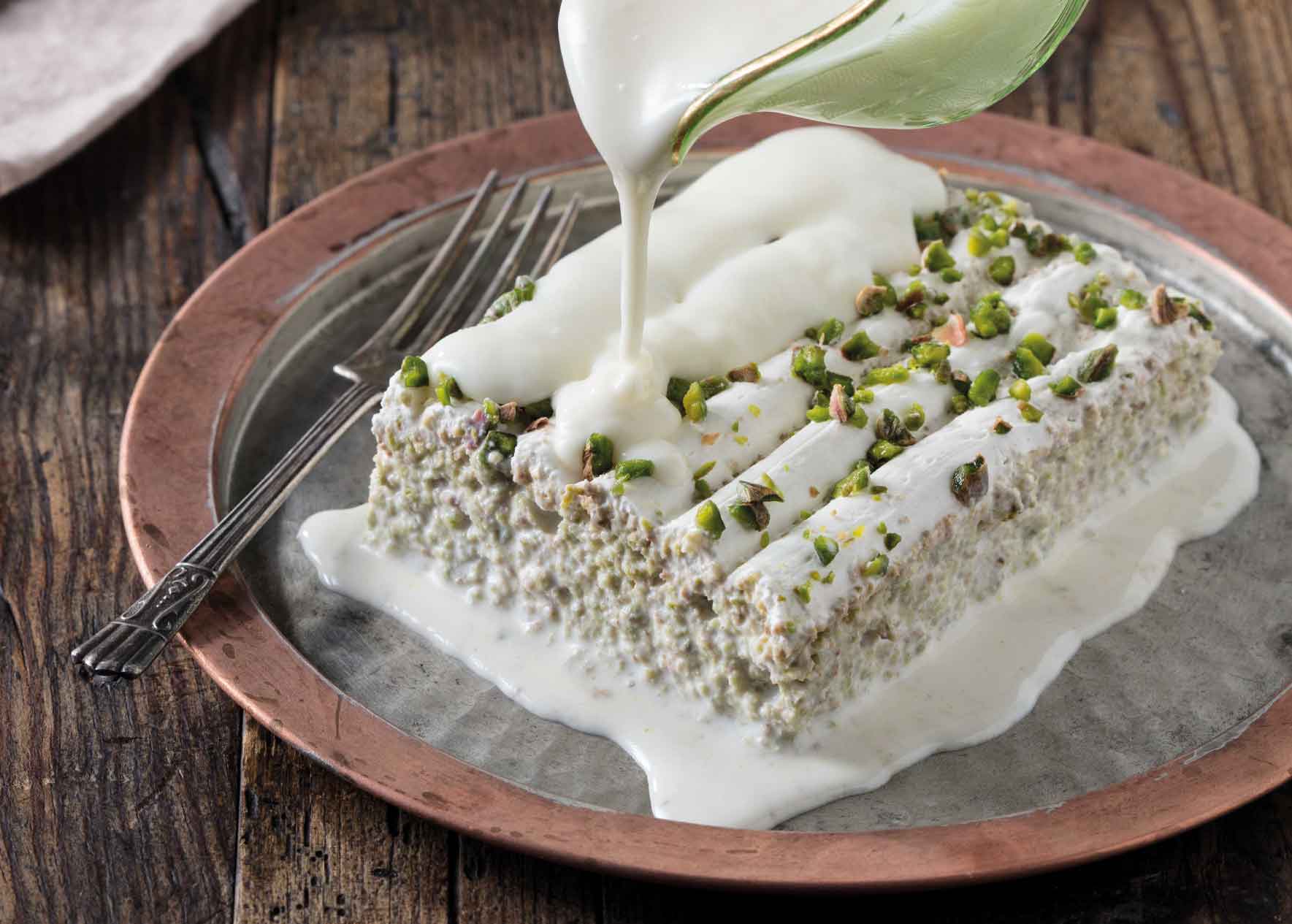
Fresh cream, chocolate, pistachios, and fruit lead many cake recipes. Black Forest brings cherries beside dark chocolate. White Chocolate Forest favors forest berries. Raspberry, strawberry, and banana appear throughout other selections.
Pistachio Chocolate Cake gives Türkiye’s celebrated nut a patisserie setting. Pistachio Baklava Cake links cake culture with one of Hafiz Mustafa’s oldest dessert families.
Milk desserts bring their own history.
Keşkül, sütlaç, tavuk göğsü, and supangle have familiar places in Turkish dessert culture. Fruit puddings add brighter flavors. Tres leches appears in caramel, raspberry, saffron, and coffee recipes.
Fresh dairy desserts demand freshness above nearly everything else.
Cream needs a clean taste. Fruit needs fragrance. Chocolate needs depth. Milk desserts need their proper consistency.
Hafiz Mustafa prepares this part of the collection for the pleasure of fresh enjoyment.

Dragees and Fine Confections
Dragees prove how much pleasure can fit inside a small confection.
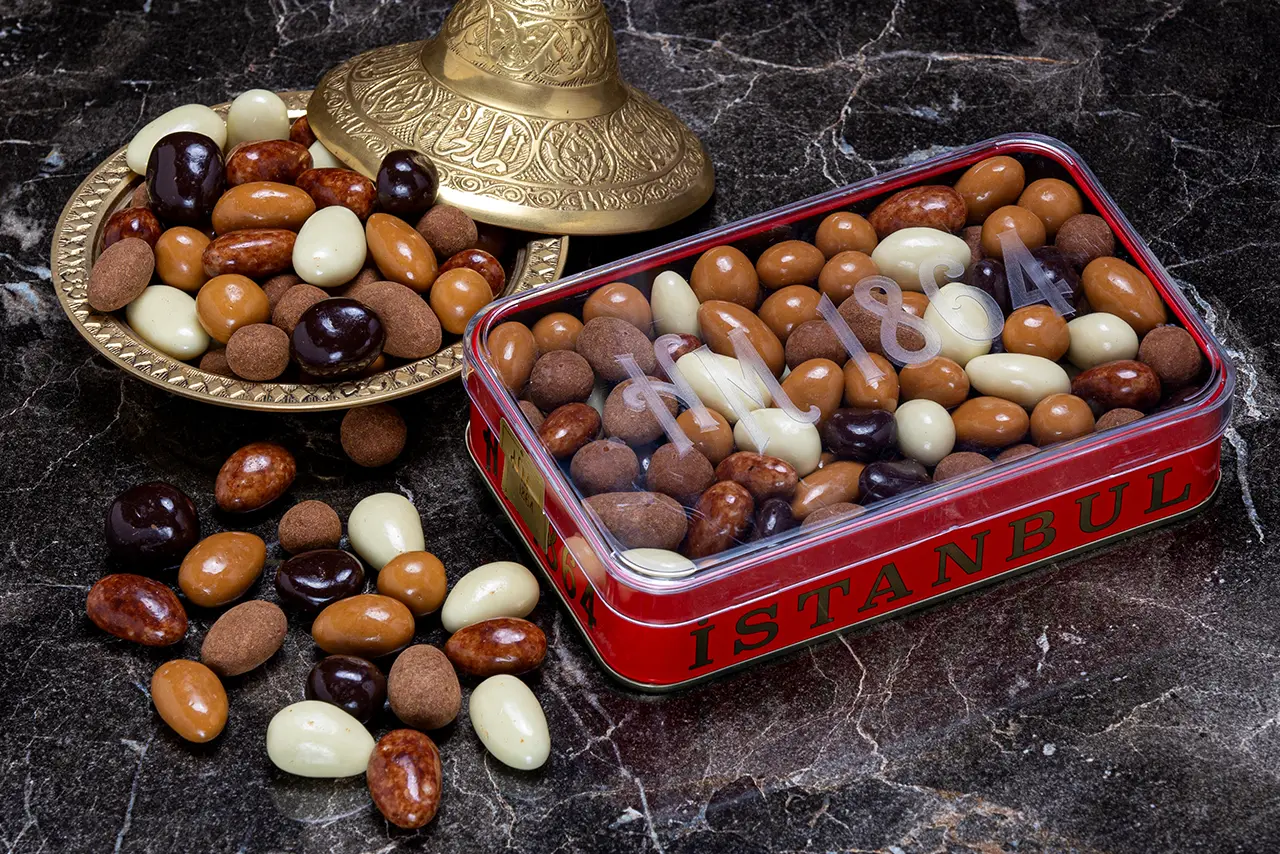
Almonds and hazelnuts form the center of many Hafiz Mustafa varieties. Fine chocolate surrounds the nut. Caramel, cinnamon, gum mastic, or honey adds another character to the recipe.
Fruit recipes introduce mango and bitter cherry. Tiramisu Almond moves toward coffee and cocoa.
Caramel Almond, Caramel Hazelnut, Cinnamon Almond Princess, Gum Mastic Almond, and Honey Almond belong to a collection built around ingredients whose flavor remains clear in every bite.
A fine dragee depends heavily on its center.
Good almond tastes like an almond.
Good hazelnut tastes like hazelnut.
Fine chocolate complements them.
Hafiz Mustafa asks the ingredient to speak for itself.

Kunefe, Helva, and Chestnuts
Türkiye’s dessert heritage extends far beyond pastry trays.
Kunefe is strongly associated with Hatay’s culinary tradition. Fine kadayif surrounds its characteristic cheese filling. Heat gives the dessert its familiar contrast between crisp pastry and melted cheese. Sherbet and pistachio complete the experience at the table.
Helva follows a much older road through Anatolia.
Tahini gives it its sesame character. Pistachio and cacao recipes introduce different expressions while the familiar dense texture remains central.
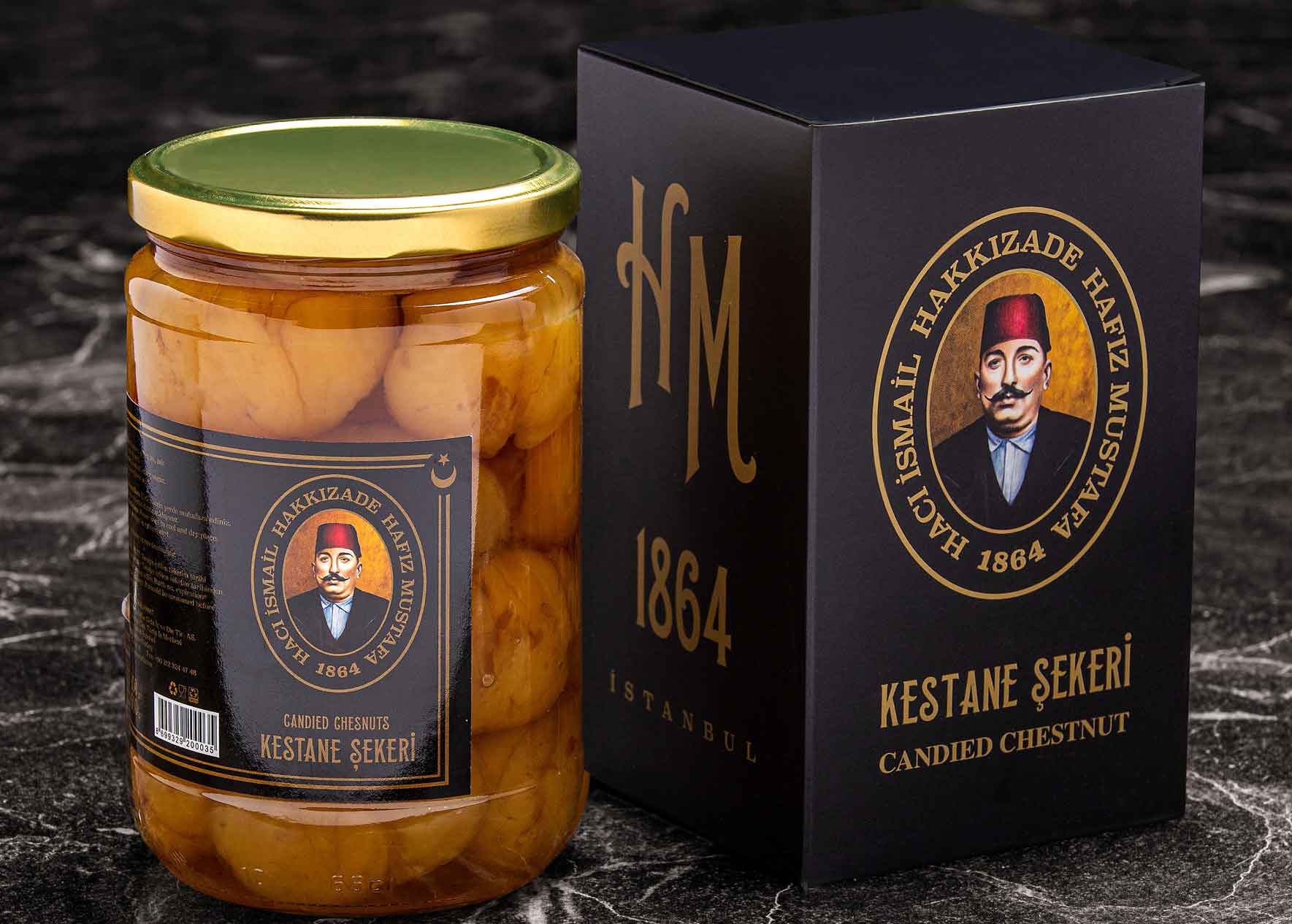
Candied chestnuts lead toward Bursa.
The city has a celebrated relationship with chestnut confectionery, and the fruit has become one of Türkiye’s best-known regional sweets.
Honey belongs nearby for another reason. Flower honey and chestnut honey depend on the natural character of their origin.

Coffee, Tea, and Salep
Dessert rarely ends when the plate becomes empty.
Turkish coffee may arrive next.
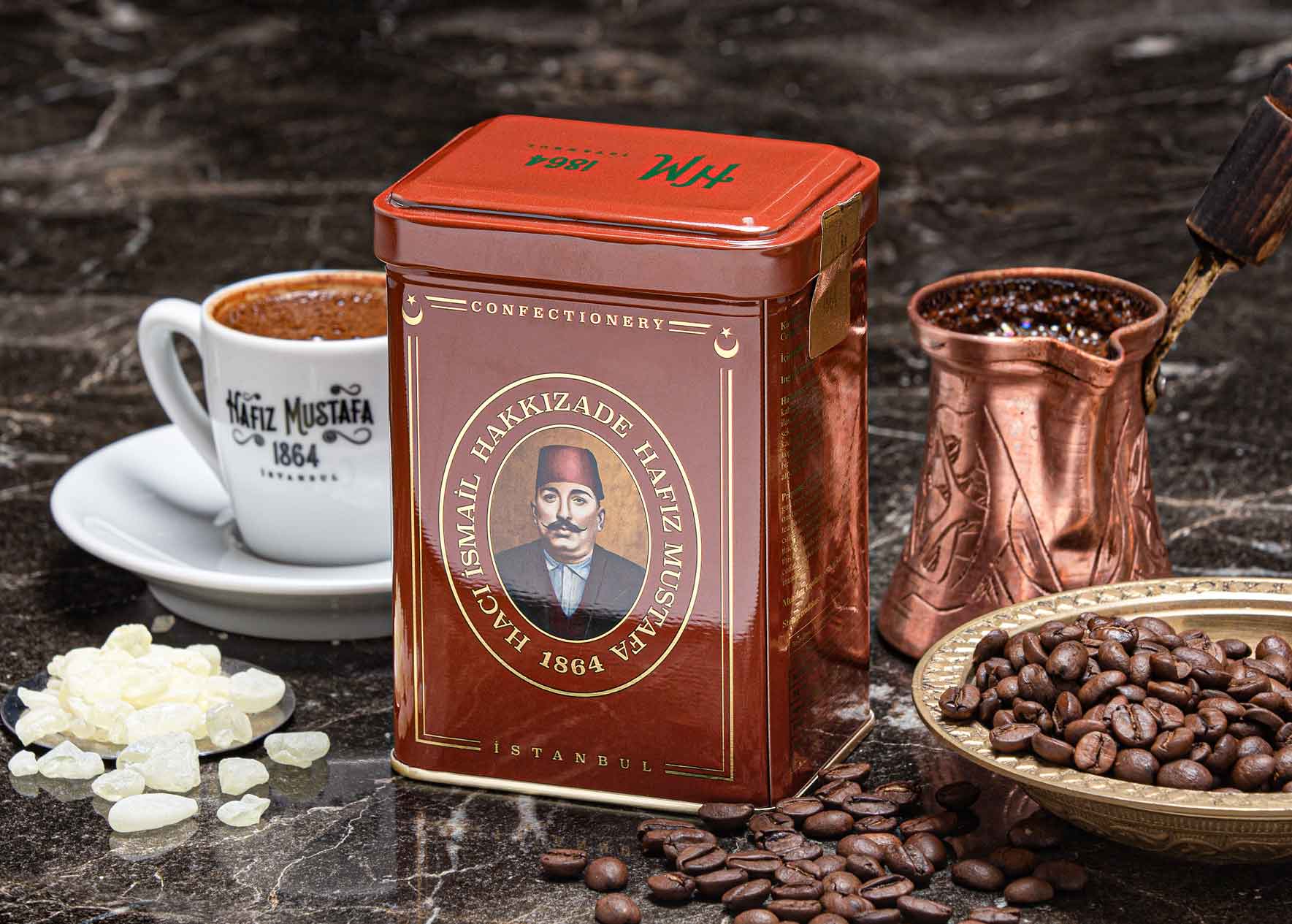
Hafiz Mustafa coffee uses 100% Arabica beans sourced from Central America and Africa. Traditional Foça stone mills produce the fine grind associated with Turkish coffee.
Golden Coffee features saffron. Coffee Anatolia recalls mesir paste and its spice heritage. Alaturca
Coffee includes salep. Gum Mastic Turkish Coffee introduces another aroma known throughout Turkish confectionery.
Tea belongs to another part of daily life. Turkish Black Tea has a familiar place beside dessert and conversation. Apple and pomegranate teas offer fruit-led choices.
Salep belongs to winter. Its warm texture and distinctive aroma recall a drink enjoyed in Istanbul and other Turkish cities for centuries.

Ingredients Decide the Taste
Luxury can begin with something as simple as a pistachio.
Its aroma tells the truth immediately.
Butter does the same. Fruit does the same. Chocolate does the same.
Hafiz Mustafa’s confectionery philosophy gives ingredients genuine authority. Selected pistachios, walnuts, hazelnuts, plain butter, fresh dairy ingredients, real fruit character, and natural beet-derived sweetness shape the recipes.
Traditional Turkish desserts are baked fresh every morning.
Fresh preparation protects phyllo’s delicacy. Nuts retain their perfume. Dairy desserts reach the table in their proper condition. Cakes keep the freshness expected from cream and fruit.
Experienced hands matter because recipes contain information beyond measurements.
Dough has a feel.
Sherbet has a proper moment.
Baklava has a proper color.
Lokum has a proper tenderness.
Coffee has a proper grind.
Recipes give instructions. Experience gives judgment.

Atelier de Haute Confiserie
Desserts deserve thought.
Ingredients deserve respect.
Historic recipes deserve understanding.
Turkish confectionery contains centuries of culinary intelligence. Baklava carries one discipline. Lokum carries another. Kadayif asks for different knowledge. Helva belongs to another tradition. Turkish coffee follows its own ritual.
Centennial Desserts gives these traditions their own identities within the Hafiz Mustafa world.
The philosophy favors depth over novelty.
Taste leads.
History gives meaning.
Quality gives continuity.
Proven by Taste
Hafiz Mustafa’s story has passed sixteen decades.
Istanbul changed around it. New countries entered the story. New guests learned the name. New branches welcomed people far beyond the streets where Hafiz Mustafa was first known.
The reason for continuing still fits inside one bite.
A pistachio should taste extraordinary.
Phyllo should feel delicate.
Lokum should have tenderness.
Coffee should release its fragrance as the cup reaches the table.
Dessert should make someone want another piece.
Simply the most delicious desserts on earth...
Proven by taste. Proved by history.
Shop by Collection